

FPL rate hike would double-charge customers to pad profits, filings say
Company shareholders would make the highest rate of profit in the nation, according to opponents.
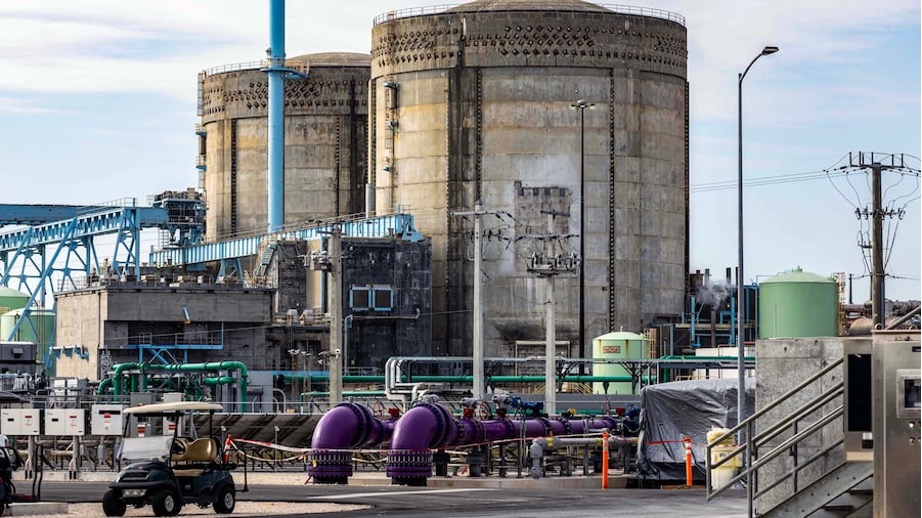
Florida Power & Light's rate hike request includes a rate of shareholder profit that would be the highest in the nation, opposing lawyers wrote. The photo depicts one of the company's nuclear power plants. [ D.A. VARELA | Miami Herald ]
By Emily L. MahoneyTimes staff
If state utility regulators approve Florida Power & Light’s request to hike base rates by more than $9.8 billion over four years, it would mean charging Floridians billions more than necessary solely to fund soaring shareholder profits, the state consumer advocate wrote in filings to utility regulators.
The company’s requested range for its rate of return has a midpoint of 11.9%, which would be the highest for any electric utility in the nation, lawyers opposing the hike said.
In comparison, Tampa Electric shareholders earn a midpoint of 10.5% while Duke Energy Florida’s get 10.3%. Both are higher than the national average.
But if its rate hike request is approved in full, Florida Power & Light’s shareholders could actually earn more at the expense of customers. According to the Legislature-appointed consumer advocate, called the public counsel, the company is also proposing a first-of-its-kind mechanism to double-charge customers to cover its federal taxes, allowing the company to max out its profits at the top of its range at 12.9%.
When authorizing shareholder profits, utility regulators permit companies to earn a rate within a two-percentage-point range, expecting actual returns to hover near the middle. For the past four years, though, Florida Power & Light has already been earning “well over” its approved midpoint, wrote Public Counsel Walt Trierweiler, and wants to raise the bar again.
“In today’s tough economic climate, FPL’s customers are already under great financial pressure, and ... unreasonable and imprudent costs are driving unfair, unjust, unreasonable, and thus unaffordable bills,” Trierweiler wrote. More than 12 million residents and businesses will see their bills impacted by this case.
Florida Power & Light’s new tax mechanism “would, for the first time in Commission history, permit a utility to take actual, customer money that FPL has already collected” for the purpose of paying federal income tax and instead allow the company to use that money to pay out shareholder dividends, Trierweiler wrote. Florida Power & Light would then “re-collect, with carrying costs, that money AGAIN from future customers who will receive no benefit.”
“The approval of (this request) would shatter several different traditional ratemaking principles and has no statutory basis,” he added.
Related: Florida bill to slash utility profits dies after Duke Energy, FPL lobbying
The price tag of this tax mechanism, according to an expert hired by Trierweiler’s office, would add up to $1.7 billion. That’s on top of the nearly $10 billion increase Florida Power & Light is seeking for the rate hike.
The allegations, which were echoed by other lawyers challenging the hike, are some of the most serious against the powerful utility company as it seeks what affordability advocates have called the largest rate hike request in American history. Florida Power & Light has said that the hike to base rates is necessary for it to cover the costs of a booming population that is demanding more energy.
Base rates are a major component of electric bills, which also contain other charges for things like fuel and storm recovery.
In a statement, Florida Power & Light spokesperson Andrew Sutton said the company’s proposal will allow it to make smart investments that help keep customer bills low.
“FPL has operated one of the most efficient utilities in the nation,” he said. “In fact, under FPL’s proposal, the typical residential customer bill in January 2026 will be lower than it was 20 years ago when adjusted for inflation.”
As for the tax mechanism, it “would benefit customers by providing rate stability through the end of the decade,” he added.
Lawyers fighting the hike disagreed.
“Benignly dubbed the Tax Adjustment Mechanism, this novel scheme takes tax benefits paid for and owed to its customers and redeploys them as a slush fund to maximize” shareholder profit, wrote Bradley Marshall, who represents three consumer and environmental groups. “FPL’s filing is replete with further proposals to maximize its earnings no matter the impact to its customers.”
These filings, submitted last week to the Florida Public Service Commission, preview the biggest issues to come if the case proceeds to public hearings next month.
Those hearings, scheduled for two weeks starting Aug. 11, typically resemble a court trial in which company executives are grilled on the witness stand about why the hikes are justified.
The commissioners of the Florida Public Service Commission, who are appointed by the governor, have the final say over whether the hikes will be approved and to what extent.

0 Comments