
Folks in the news media are in the habit of characterizing policies that weaken environmental protections and promote the exploitation of America’s natural resources as “conservative.” They use the term as shorthand for policies favored by Republican elected officials. Anti-environment politicians on the right also adopt the “conservative” label to give gravitas to their agenda.
The problem is that such mislabeling belies a profound ignorance about what genuine conservatism really is.
It’s no accident that the words “conservative” and “conservation” were derived from the same root word, conserve. Ronald Reagan once rhetorically asked “What is a conservative after all, but one who conserves?”
Conservative political theorist and author Russell Kirk put a finer point on it when he proclaimed “Nothing is more conservative than conservation.” And poet/author T.S. Eliot emphasized a faith-based rationale for conservation when he wrote, “A wrong attitude towards nature implies, somewhere, a wrong attitude towards God.”
The Foundation
The connection between conservation and conservatism has its roots in the very first expression of modern conservative political thought. Edmund Burke (1729-1797) was an Irish born English statesman who is widely regarded as the founder of modern conservatism.
Burke described human society as a partnership, not only between those alive today, but between the living, the dead, and those yet to be born. Therefore, those of us here today have a duty to those who will come after us — and that includes a duty to be good stewards of our God-given natural inheritance.
In that context, Burke placed a high value on prudence. Being prudent means exercising good judgement, self-discipline, and forethought, not merely acting on whim, impulse, or short-term thinking.
What is or isn’t conservative doesn’t change or evolve over time; it is a constant. The fact that people who seek to exploit our natural environment for short term gain label themselves “conservative” doesn’t magically make them so.
This is not to say we shouldn’t utilize the natural environment, we obviously must do so to survive, but it’s a question of balance.
For example, we need wood for a variety of products that improve our lives, but that doesn’t mean that we should level every forest towards that end. Our forests — and the trees that comprise them — serve other valuable purposes, many of which are far more essential to human life than the products we fashion from wood.
Respecting the Design
For people of faith, it is also incumbent upon us to respect God’s design. Let’s take wetlands for example. Wetlands provide numerous services for those who live downstream of them. They absorb and hold rainwater, thus reducing the fast runoff that causes flash flooding. By holding water and releasing it slowly, wetlands can also protect downstream residents from periods of drought. They filter pollutants out of the water too.
When a developer is allowed to pave over a wetland to build a housing development or strip mall, all of those services it provided for people living or working downstream are eliminated. Downstream property owners will be adversely impacted by greater flood risk, vulnerability to drought, and dirtier water.
When these consequences manifest themselves, governments typically respond by using our taxpayer money to replace the services that wetlands provided for free with dams, dikes, canals, culverts and other infrastructure. This should bother anyone with a fiscal conservative bone in their body.
The infrastructure required to replace those wetland functions is expensive, and therefore; allowing someone to fill, pave and build over the wetland sets in motion extra costs for us taxpayers. And it’s not just the cost of building such infrastructure, that infrastructure must be maintained forever. This is not a cost that only we bear, it is a financial burden we pass on to our children and grandchildren.
Other aspects of God’s design include the carbon cycle, which takes excess carbon out of the atmosphere and sequesters it underground. Eventually, that excess carbon turns into coal, oil and natural gas. So, when we dig up those fossil fuels and burn them, we are actually reversing that process and loading up the atmosphere with carbon from bygone eras.
It then behooves us to consider that God might have designed the carbon cycle to keep our atmosphere stable and support life on what President Reagan liked to call “this magical planet God gave us.” That’s not to say that we go cold turkey and swear off fossil fuels, as some on the political left argue, but it does mean that it is probably prudent to moderate our use and support new, cleaner energy sources that can reduce our reliance on fossil fuels over time.
Reagan offers a great example of letting science (the study of our planet and natural systems) inform his actions, even when there was a certain degree of uncertainty. In 1985 scientists discovered that our protective ozone layer was rapidly thinning and that a hole developed in it. They believed that this was being driven by the use of man-made refrigerants called chlorofluorocarbons (CFCs).
Recognizing that further ozone depletion would likely expose us, and future generations, to ever increasing amounts of dangerous solar radiation, President Reagan pushed through the Montreal Protocol Treaty to phase out CFCs.
He told his staff at the time that even if the science might be off, he did not want to risk the well-being of future generations by not acting on the information he had. Reagan’s prudence in this situation exemplifies real conservatism.
Natural Attitude Adjustments
Part of respecting God’s design means recognizing the intrinsic value of the natural world as He created it. All too often, people regard that world and the creatures in it with indifference, disdain or outright hostility.
Opposition to national parks and monuments, wilderness areas, roadless forests and other areas protected from development is common. That opposition typically comes from people or entities who seek to profit by developing those areas, or by those who want easier access by motor vehicle.
Richard Weaver, an influential American conservative scholar and defender of Southern traditionalism, articulated the more reverent and conservative position:
“Nature is not something to be fought, conquered and changed according to any human whims. To some extent, of course, it has to be used. But what man should seek in regard to nature is not a complete domination but a modus vivendi - that is, a manner of living together, a coming to terms with something that was here before our time and will be here after it.”
Wild places, in addition to being beautiful, intact examples of God’s handiwork, benefit mankind in many ways. But more than that, these places actually promote conservative values.
The effort, knowledge, and awareness required to access wild, backcountry areas is a good thing. Everything in life shouldn’t be easy, or only geared for those unwilling to expend the effort. Remote wild places that require work and knowledge to explore provide something I call “merit-based access.”
People who criticize wilderness and other protected areas as being “locked up” choose to ignore the existence of merit-based access and are dismissive of the value of such effort-based experiences. To them, nature is a thing to be exploited, either for profit or convenience.
The same is true for those who are hostile to wildlife, especially so-called predator species like wolves and bears. Why is there intolerance to these animals when they are simply doing what is necessary to survive, just as God designed?
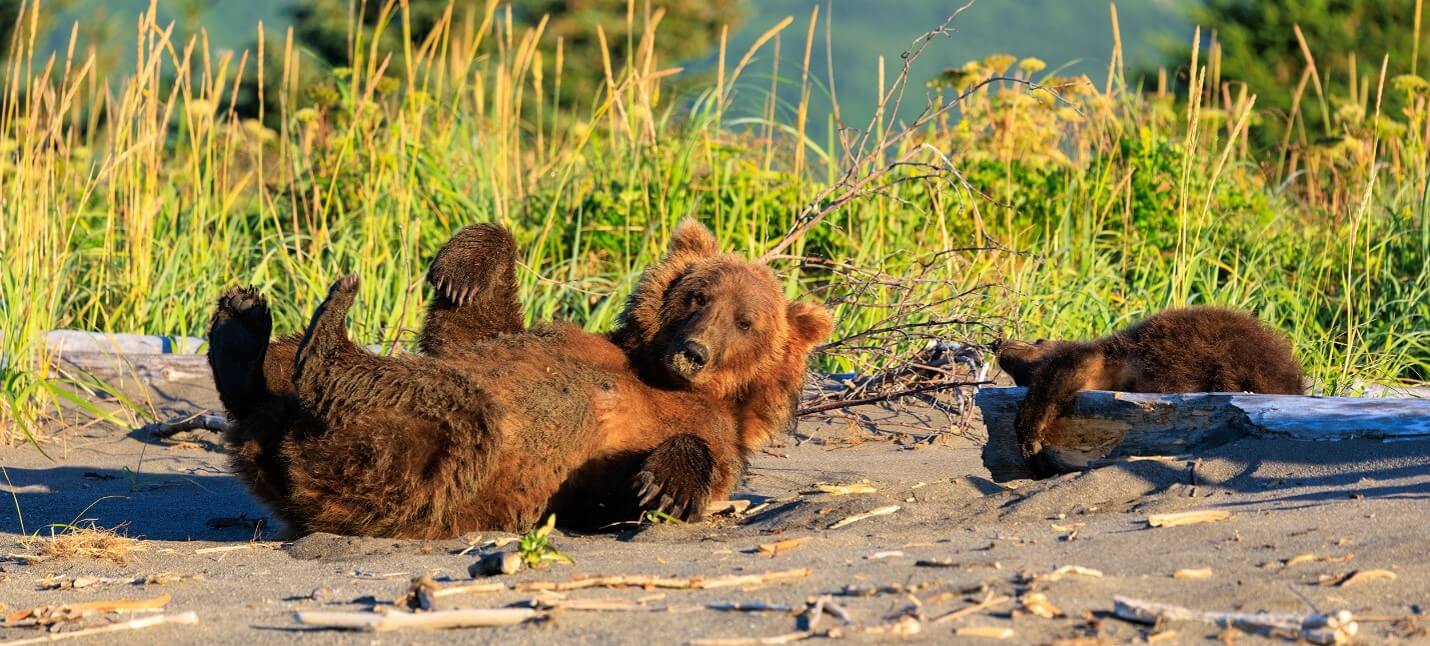
Mankind was given the ability to adapt like no other creature, thus it seems that it is our responsibility to make more of an effort to coexist with wildlife so it can live life as God intended.
Weaver described selfish and intolerant attitudes toward nature as impious and a form of heresy because “it violates the belief that creation or nature is fundamentally good.” He points out that “man is not the lord of creation, with an omnipotent will, but a part of creation, with limitations, who ought to observe a decent humility in the face of the inscrutable.”
Truly wild places foster that humility Weaver speaks of. Nature is very rewarding for those who are prepared, but unforgiving to those who are not.
As someone who has spent a lot of time in the wilderness, and in close proximity to 1,000-pound grizzly bears, I know first hand how such experiences have contributed to my personal growth. Not only am I more humble as a result, but I’m also more perceptive, patient, and appreciative of God’s design.
How can a real conservative oppose aspects of God’s creation that improve our work ethic, encourage personal responsibility, undergird our faith, and imbue us with a greater appreciation of His handiwork?
Our Duty to Nature
The leftist mantra that came out of the 1960s, “If it feels good, do it,” was antithetical to Burke’s founding conservative view of society as a multi-generational partnership that requires us to act responsibly in furtherance of a healthy society.
Today, many folks on the political right who claim to be conservative have adopted that very same leftist notion. While they might not be burning bras, living out of a VW van, or taking LSD, the ideology is exactly the same.
On the right, this live for today ideology is often peddled as being conservative, pro-business, or anti-regulatory, but it really boils down to “I want to do what I want when I want” or “get mine,” irrespective of how it impacts others.
This selfish and myopic view represents the most radical varieties of liberalism and libertarianism. Kirk had a point when he once opined that “the Devil was the original Libertarian.”
Burke’s view of mankind’s duty to society, both present and future, is the true North Star for authentic conservatism.
And no one in recent history articulated this idea better than President Reagan and British Prime Minister Margaret Thatcher, whose shared conservative values no doubt played a big role in their close friendship.
Their words should instruct all of us, especially fellow conservatives, on exactly what a conservative — and reverent — attitude towards nature is.
Reagan, speaking in 1984 at the dedication of the National Geographic Society headquarters said:
“You are worried about what man has done and is doing to this magical planet that God gave us. And I share your concern. What is a conservative after all but one who conserves, one who is committed to protecting and holding close the things by which we live...And we want to protect and conserve the land on which we live -- our countryside, our rivers and mountains, our plains and meadows and forests. This is our patrimony. This is what we leave to our children. And our great moral responsibility is to leave it to them either as we found it or better than we found it.”
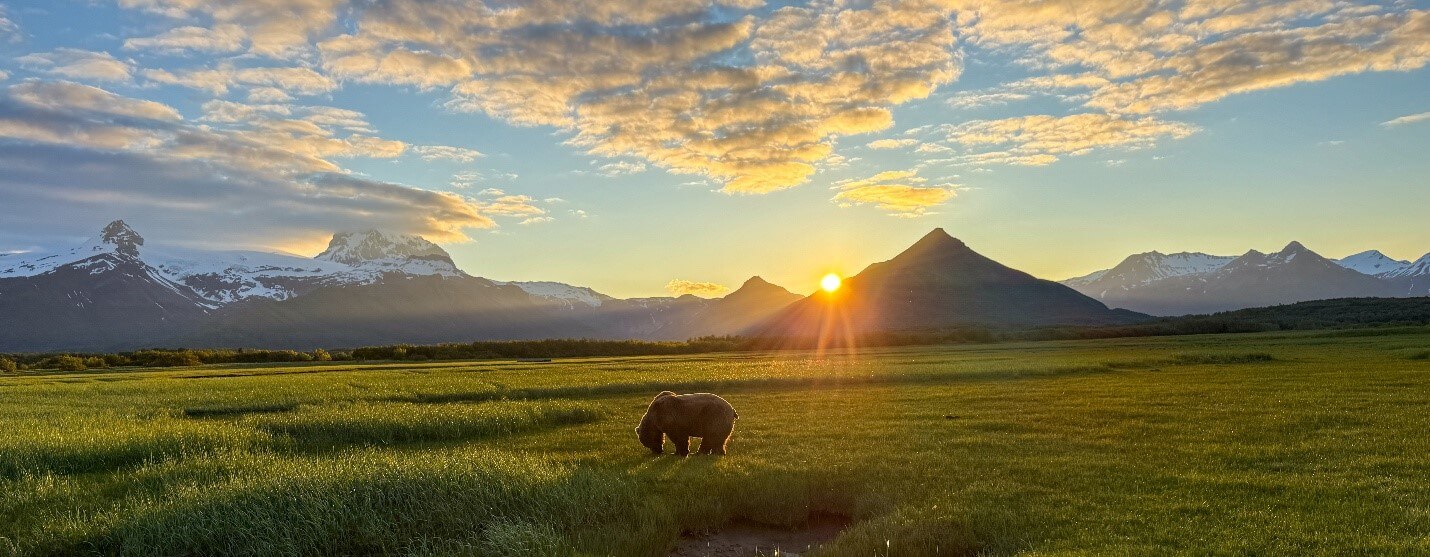
And Thatcher, speaking at the 1990 World Climate Conference challenged us with these eloquent words:
“We must remember our duty to Nature before it is too late. That duty is constant. It is never completed. It lives on as we breathe. It endures as we eat and sleep, work and rest, as we are born and as we pass away…It will weigh on our shoulders for as long as we wish to dwell on a living and thriving planet, and hand it on to our children and theirs.”
While Reagan and Thatcher used different words, they were expressing the same fundamental conservative values that Burke did 200 years earlier. More specifically, they were instructing us on what a genuinely conservative attitude towards nature looks like.
Subscribe to our Substack for more insights, updates, and new posts delivered straight to your inbox.

0 Comments