By David Jenkins, Andrew Rothman — David is President of Conservatives for Responsible Stewardship & Andrew is the Wildlife Campaigns Director for Environment America Every year across our nation hundreds of people die, and tens of thousands are injured in vehicle-wildlife collisions — and the carnage doesn’t end there. The annual death toll for wildlife runs in the millions, not to mention the roughly $10 billion in property damage. It’s a huge problem in most states. Thanks to the efforts of the Utah Department of Transportation, along with its partners and federal grants, the Beehive State is one of a handful of states aggressively working to reduce vehicle-wildlife collisions with strategically placed wildlife crossings. Utah installed the first wildlife bridge in the nation, and it now has 60 wildlife crossings, which come in the form of specially designed bridges, tunnels, underpasses and fencing. For some folks, it might seem strange to expect animals to use an overpass or tunnel, but they do. A video posted by the Utah Division of Wildlife Resources shows a diverse array of wildlife using the Parleys Summit wildlife crossing. Moose, deer, bears, bobcats, coyotes and even porcupines can be seen safely crossing I-80 while vehicle traffic passes underneath. Read the rest of the op-ed at Deseret News....
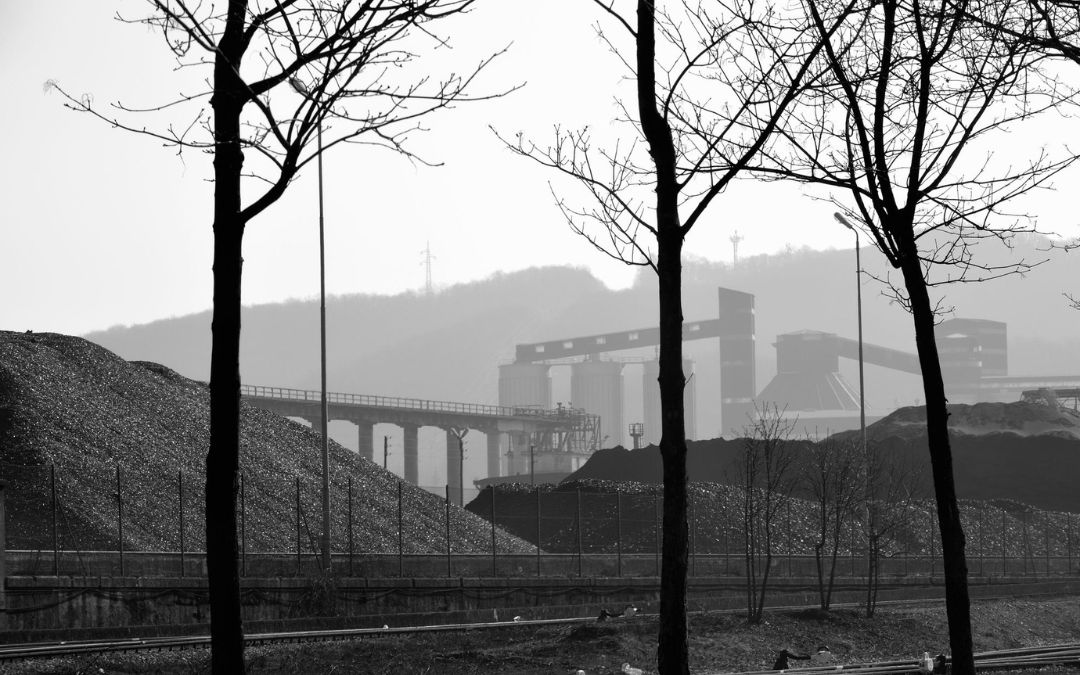
By Karl Schneider A coal-fired power plant in Indiana will receive millions of dollars from the federal government after the Trump administration on June 4 announced $700 million in subsidies to the U.S. coal industry. Hallador Power Company’s Merom Generating Station, which sits along Sullivan Lake south of Terre Haute, will receive more than $27 million to modernize. The 1080-megawatt plant is one of 12 listed on the U.S. Department of Energy website receiving subsidies under the 1950 Defense Production Act. “This modernization initiative will maintain operational reliability and promote environmental stewardship,” a DOE news release says. Hallador Energy, based in Colorado, did not immediately respond to IndyStar’s request for comment. President Trump announced the subsidies from the Oval Office, saying the federal money will support thousands of jobs and save Americans billions in electricity costs. “We’re officially invoking the Defense Production Act to save 13 coal plants …” Trump said. “These were incredible plants.” Congress established the federal law behind the infusion of funds in 1950 during the Korean War. The law gives the president authority to expand the U.S. industrial base. The news sparked disapproval from several corners. David Jenkins, president of the national nonprofit Conservatives for Responsible Stewardship, said the “taxpayer dollar handout to the coal industry is boneheaded on steroids,” in a news release. “This is a total misuse of the Defense Production Act, a giant gift-wrapped payout to subsidize and prop up a flailing industry that can no longer compete in the free market,” said Jenkins, whose group is based in Virginia. Read the rest of the story at...
New Coal-Fired Plants in Anchorage, Alaska, and Mt. Storm, West Virginia, Would Total 2.85 GW. They Would Be the First New U.S. Coal Plants to Come Online Since 2013. By Robert Walton, Senior Editor Dive Brief: The U.S. Department of Energy on Thursday committed up to $850 million to construct two new coal-fired power plants, modernize more than a dozen other facilities, and bolster coal export capabilities from the West Coast. The funds will support 17 total projects, including new coal-fired plants in Anchorage, Alaska, and Mt. Storm, West Virginia, which will have a combined capacity of 2.85 GW. “It’s all very clean,” President Donald Trump told reporters at the White House. Consumer and environmental advocates criticized Trump’s support for the ailing coal sector. It is “swamp politics at its worst, and there is nothing even remotely conservative about it,” David Jenkins, president of Conservatives for Responsible Stewardship, said in a statement. Read the rest of the story at Utility...
“President Trump’s just announced plan to give a $700 million taxpayer dollar handout to the coal industry is boneheaded on steroids. It makes the Obama-era Solyndra boondoggle look shrewd by comparison. This is a total misuse of the Defense Production Act , a giant giftwrapped payout to subsidize and prop up a flailing industry that can no longer compete in the free market,” said David Jenkins, President of Conservatives for Responsible Stewardship (CRS). “This move, along with the President blocking the retirement of old coal plants that are too costly to operate, is making most Americans poorer. Enriching corporate cronies at taxpayer expense is swamp politics at its worst, and there is nothing even remotely conservative about it,” Jenkins added. About CRS: Conservatives for Responsible Stewardship (CRS) is a national nonprofit grassroots organization founded on the premise that environmental stewardship and natural resource conservation are inherently conservative, and that true conservatives endeavour to be good stewards of the natural systems and resources that sustain life on earth. Safeguarding our air and water, our public lands, our wetlands, and wildlife is, as Ronald Reagan accurately pointed out, ‘our great moral responsibility.’ We provide a critical counterbalance to those on the political right who have lost sight of their stewardship duty, and to those on the political left whose mistrust of capitalism often results in unworkable policies that polarize more than resolve. Learn more about CRS at our website: https://conservativestewards.org/ ### Here’s a roundup of media coverage generated from this CRS press release: June 8, 2026 — Indiana coal plant with data center ties gets $27M federal subsidy — Indy Star...
Utah Has an Opportunity to Lead by Example. By Steve Handy, Former Republican member of the Utah House of Representatives and a Board Member of Conservatives for Responsible Stewardship & Patrice Arent, former Democratic member of the Utah Senate and House of Representatives | For The Salt Lake Tribune Anyone who has encountered an uncollected mess on a neighborhood trail knows the basic rule: If you create a problem, you are responsible for cleaning it up. It is a simple expectation, and one that applies just as much to public policy as it does to everyday life. That principle is at the heart of a long-overdue effort underway in Utah: modernizing the state’s oil and gas bonding rules. We have both spent our careers working on issues where fiscal responsibility and sound environmental policy go hand in hand. In this case, they point in the same direction. Updating bonding requirements is a practical, balanced step that protects taxpayers while supporting a stable and accountable energy sector. Read the rest of Handy and Arents’ op-ed at The Salt Lake...
Solar power is Florida’s Cheapest, Most Abundant and Most Secure Source of Energy By David Jenkins, Conservatives for Responsible Stewardship As a lifelong conservative who has spent decades working on energy-related issues, including serving as a campaign surrogate on energy for John McCain’s 2008 presidential run, I recall that the GOP ethos on energy has been solidly rooted in the catchphrase “All of the Above.” That phrase is in keeping with a genuinely conservative belief in the free market and its ability to drive investment to the smartest and most cost-effective energy technologies. Not only is that approach naturally suited to keeping our energy costs low, it also can best ensure that America leads the global race to dominate future energy markets. So, it was disappointing to hear Sunshine State gubernatorial candidate Paul Renner (a Republican) seemingly abandon “All of the Above” in favor of a hairbrained energy cancel culture that results in more rate hikes and threatens our energy future. Read the rest of David’s op-ed at the Tampa Bay Times, the South Florida Sun Sentinel, or The Invading...